Financial infrastructure for creators.
A fintech platform for Pakistan's creator and freelancer economy. Projects, invoicing, milestone payments, early payouts, and a wallet built around how creators actually get paid.
A fintech platform for Pakistan's creator and freelancer economy. Projects, invoicing, milestone payments, early payouts, and a wallet built around how creators actually get paid.
Pakistan's creators earn real money, but the financial system treats them as invisible — no record of their work, no early access to what they're already owed. Agreements lived as WhatsApp screenshots, records were kept by hand in the Notes app, and payments sat on a 60–120 day cycle. My call was to test with real creators before committing to an MVP — so Create was built around how they actually get paid, not how we assumed they did.
The screen creators open first and run their week from. It surfaces their finances at a glance — what's owed, what's cleared, what's landing next — puts active projects and their milestones one tap away, and pulls every client relationship into one place. Less a feature than the home of everything a creator manages.
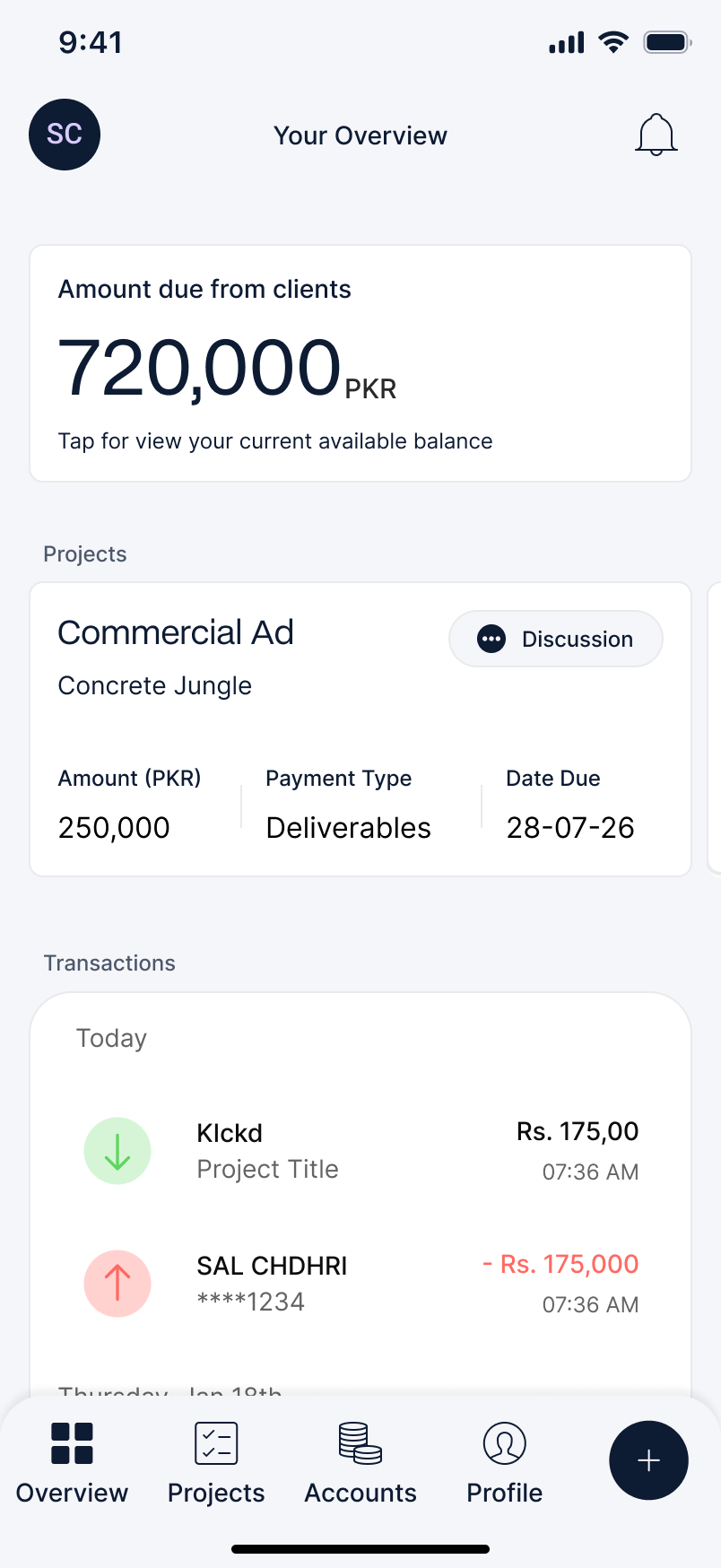
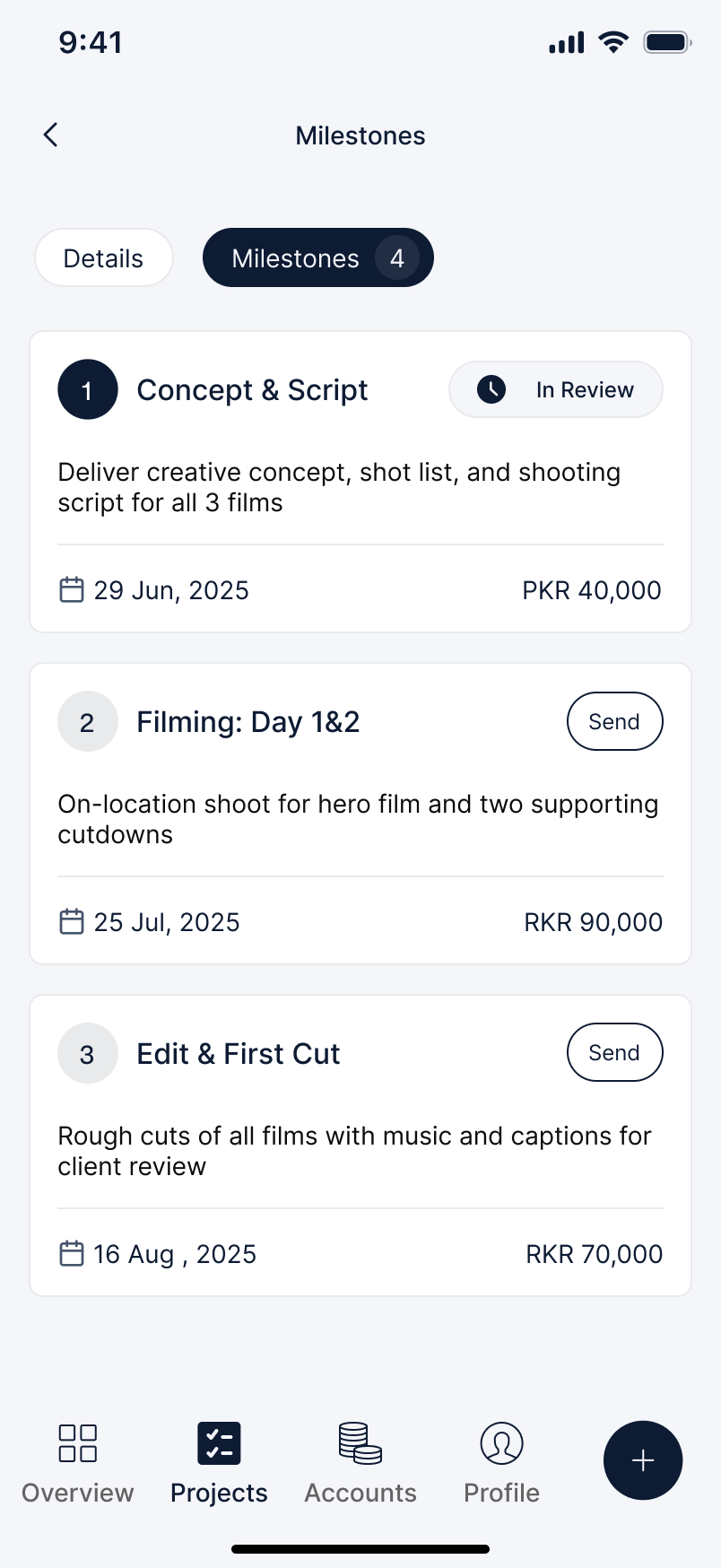
Each project holds deliverables, deadlines, and payment terms in one place — the durable record the whole economy was missing. Milestone payments release when work is approved, not when a brand remembers to pay, and invoices generate from the project and chase overdue payments on their own.
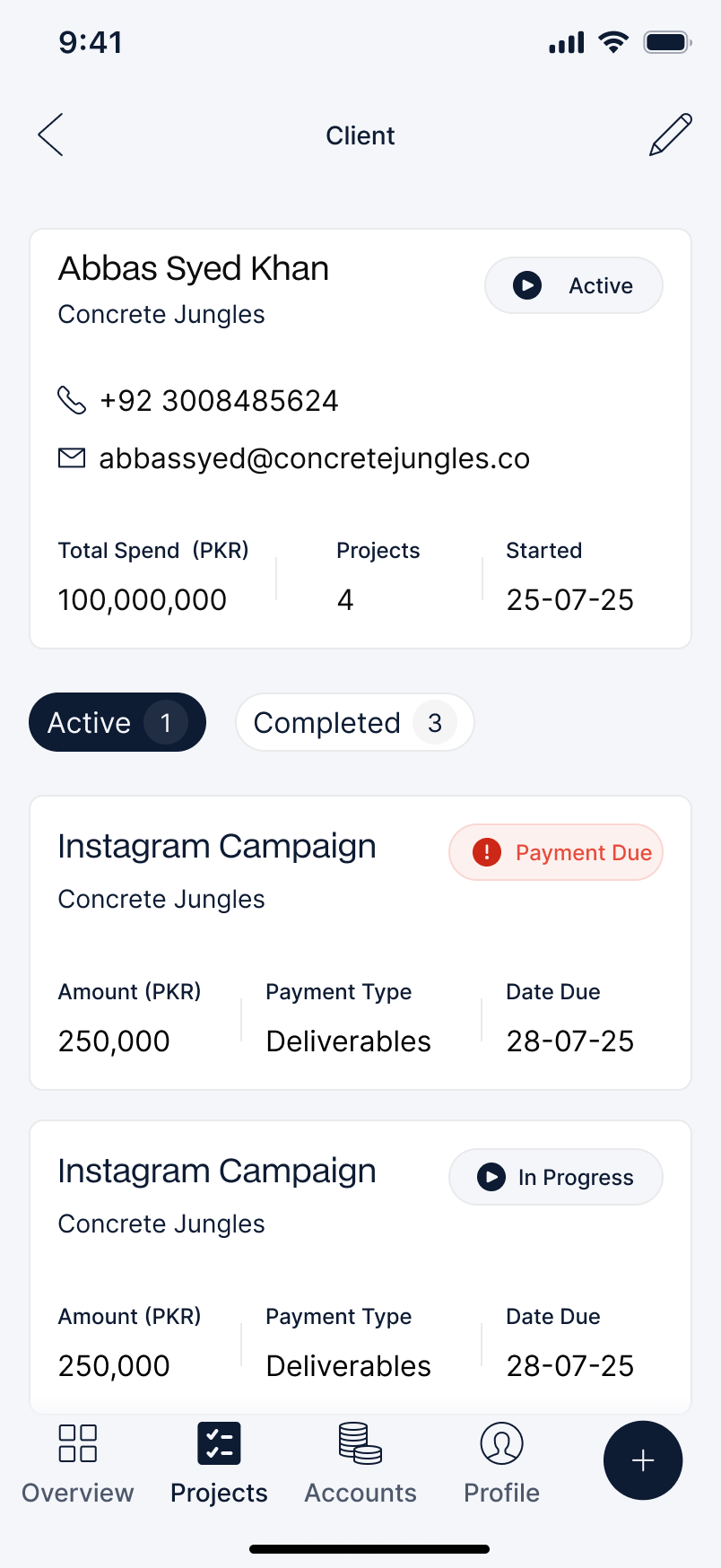
A proper CRM for creator–brand relationships. Every brand carries its payment history, project records, and agreements in one profile — no more piecing the relationship together from DMs. When a client ghosts, the creator finally has a record to stand on instead of public shaming.
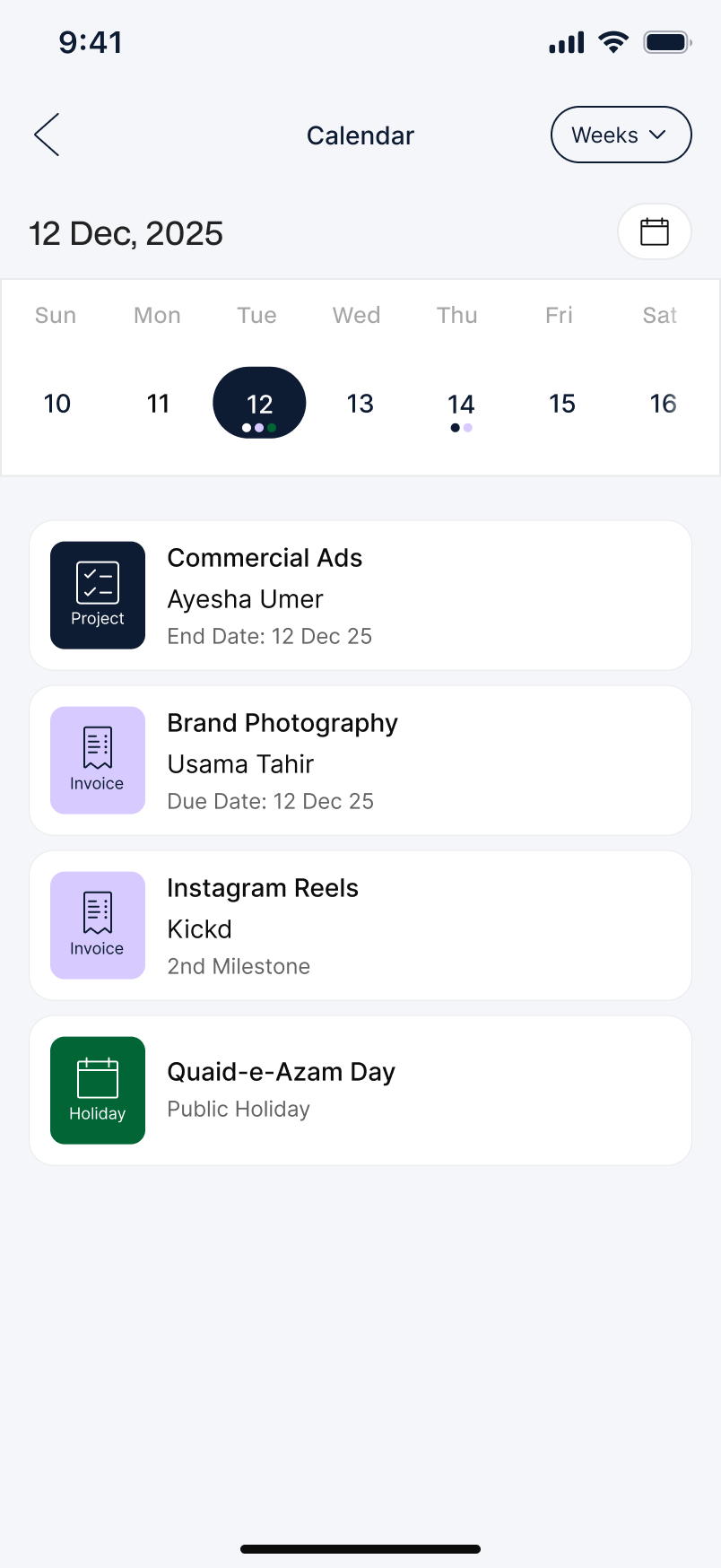
Every incoming payment, due date, and payout laid out on a timeline, so creators can see their cash position weeks ahead. It surfaced during beta — creators were already doing this by hand in spreadsheets, because a bank balance never tells them what they're actually owed.
The whole flow was built as a working prototype in Lovable before a single high-fidelity screen was drawn. I put it in front of real creators, watched what they reached for, and gathered feedback — then iterated on the prototype and tested again. Each round tightened the flow and scoped what the MVP actually needed.
Only once the flow held up under real use did it move to high-fidelity design in Figma and across to the developers. Testing on a working thing, not a static mockup, is what defined the product.
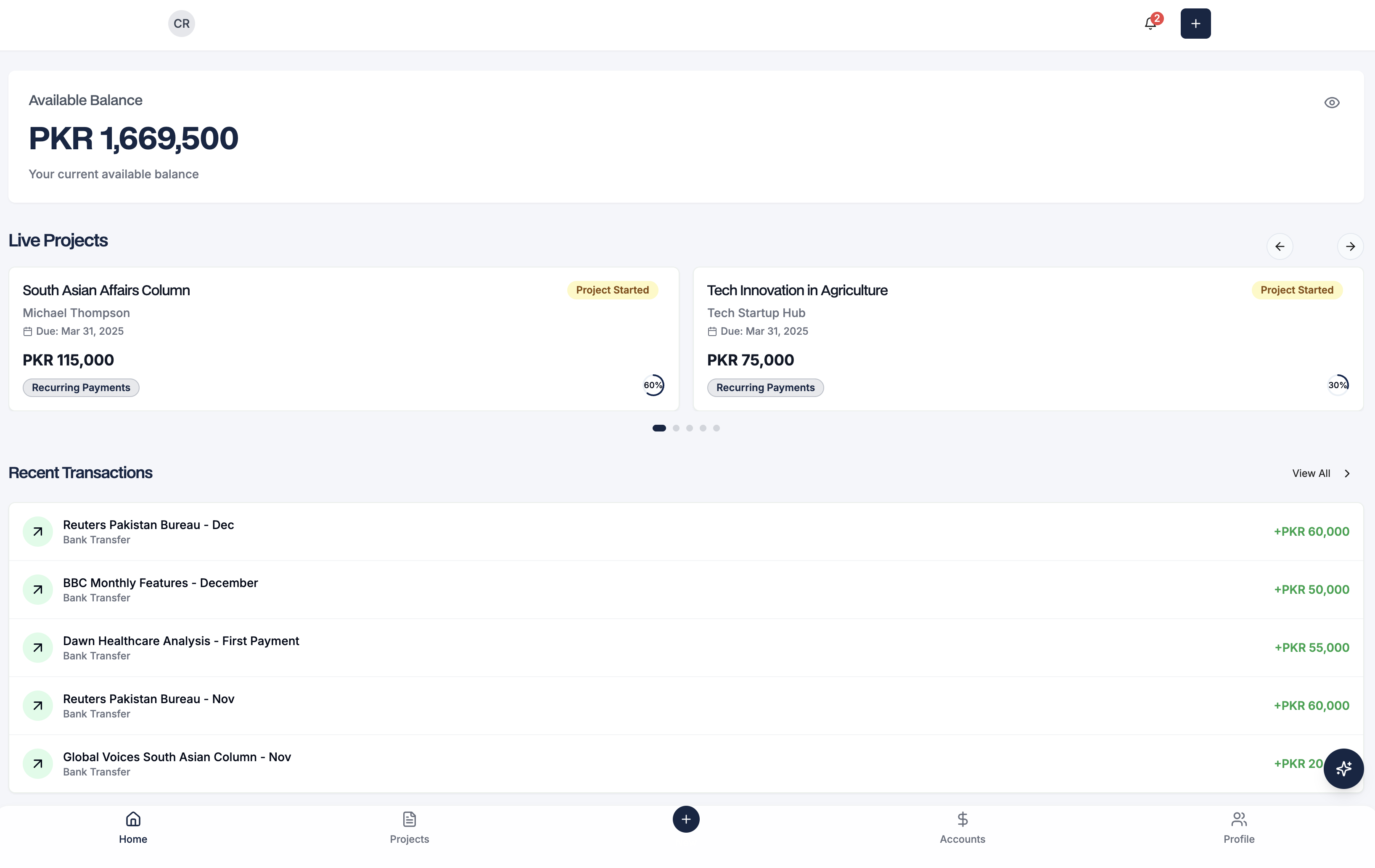
Create is finishing development, with a small group of creators testing ahead of a closed beta. A brand portal is designed in parallel for the agencies that pay creators.
One tester's reaction said it all: "looks too good to be true" — then, after using it, "loved it."
"Everything is very intention-based. Most people don't understand the value in intentional design, but they are the most impactful ones. Through the process I have learnt a lot because everything was so methodically led."
Open to full-time remote Senior Product Designer roles. If you're looking for someone who leads with strategy and ships real product, book a call.
Book a call ↗ or email me